Advanced CT Abdomen & Pelvis
Precision diagnostic imaging for internal organs, oncology, and emergency care using 128-Slice technology.
Comprehensive Guide to Abdominal CT Scanning
A Computed Tomography (CT) scan of the abdomen and pelvis is a sophisticated diagnostic tool that combines multiple X-ray measurements taken from different angles to produce high-resolution cross-sectional images. At Imperial Imaging, we utilize ultra-modern 128-slice CT technology, which allows our radiologists to visualize internal structures with sub-millimeter precision. This level of detail is essential for the early detection and management of complex medical conditions.
Clinical Importance and Applications
The abdomen is home to several vital organ systems, including the digestive, urinary, and reproductive tracts. An abdominal CT scan is often the first line of investigation for patients presenting with acute or chronic abdominal pain, unexplained weight loss, or abnormal laboratory results. It provides definitive answers where physical examination and standard X-rays may fall short.
What can an Abdominal CT detect?
- Oncology: Detection, staging, and monitoring of tumors in the liver, pancreas, kidneys, and bowel.
- Inflammatory Conditions: Diagnosis of appendicitis, diverticulitis, Crohn's disease, and pancreatitis.
- Vascular Disorders: Identification of aortic aneurysms, blood clots (thrombosis), and internal bleeding.
- Urological Health: Accurate localization of kidney and bladder stones.
The Imperial Imaging Advantage: 128-Slice Precision
The technological gap between standard CT scanners and our 128-slice system is significant. Speed is of the essence in abdominal imaging because involuntary movements (like bowel peristalsis) or the inability of a patient to hold their breath for long periods can cause blurring. Our scanner captures images so quickly that these motion artifacts are virtually eliminated, resulting in "crystal-clear" diagnostic data.
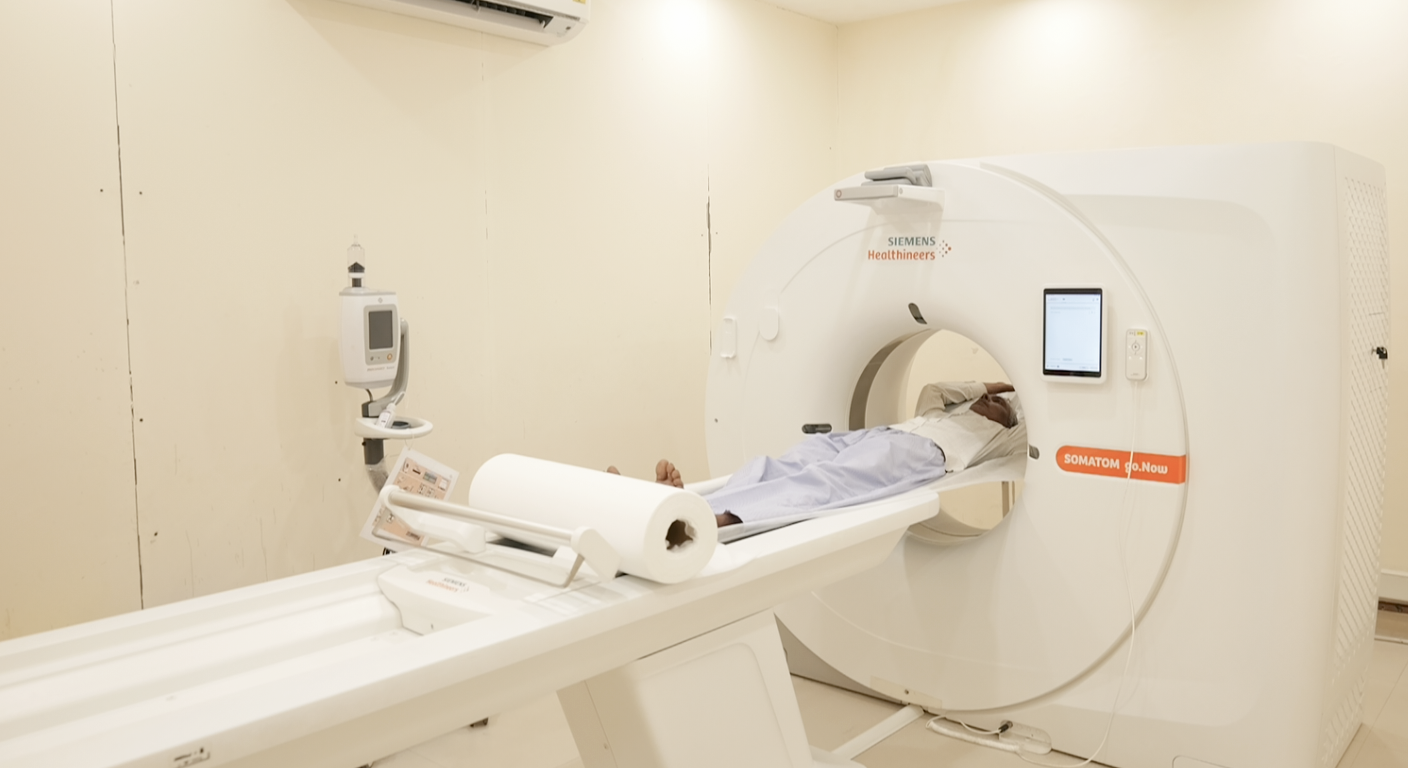
Our state-of-the-art CT suite designed for patient comfort and diagnostic excellence.
Understanding Contrast Media
Many abdominal CT scans require the use of "contrast," a specialized dye that highlights specific tissues. There are two primary types of contrast used:
- Oral/Rectal Contrast: Used to highlight the gastrointestinal tract (stomach and intestines), making it easier to distinguish from surrounding organs and potential abnormalities.
- Intravenous (IV) Contrast: Injected through a vein to highlight blood vessels and solid organs like the liver and kidneys. This is crucial for evaluating blood supply and detecting inflammation or tumors.
Patient Preparation: What to Expect
Preparation is key to a successful scan. Patients are typically asked to fast for 4-6 hours before the procedure, especially if contrast is being used. It is vital to inform our staff if you have any allergies (particularly to iodine), kidney issues, or if there is any possibility of pregnancy.
During the scan, you will lie on a comfortable motorized table that slides into the donut-shaped CT scanner. You may be asked to hold your breath for several seconds as the images are captured. The entire process is painless and usually completed within 10 to 20 minutes.
Post-Procedure and Reporting
Once the scan is complete, you can usually resume your normal activities immediately. If you received IV contrast, we recommend drinking plenty of water to help your kidneys flush the dye out of your system. Our expert radiologists will then analyze the thousands of images generated to create a comprehensive diagnostic report, which is typically shared with your referring physician within 24 to 48 hours.